

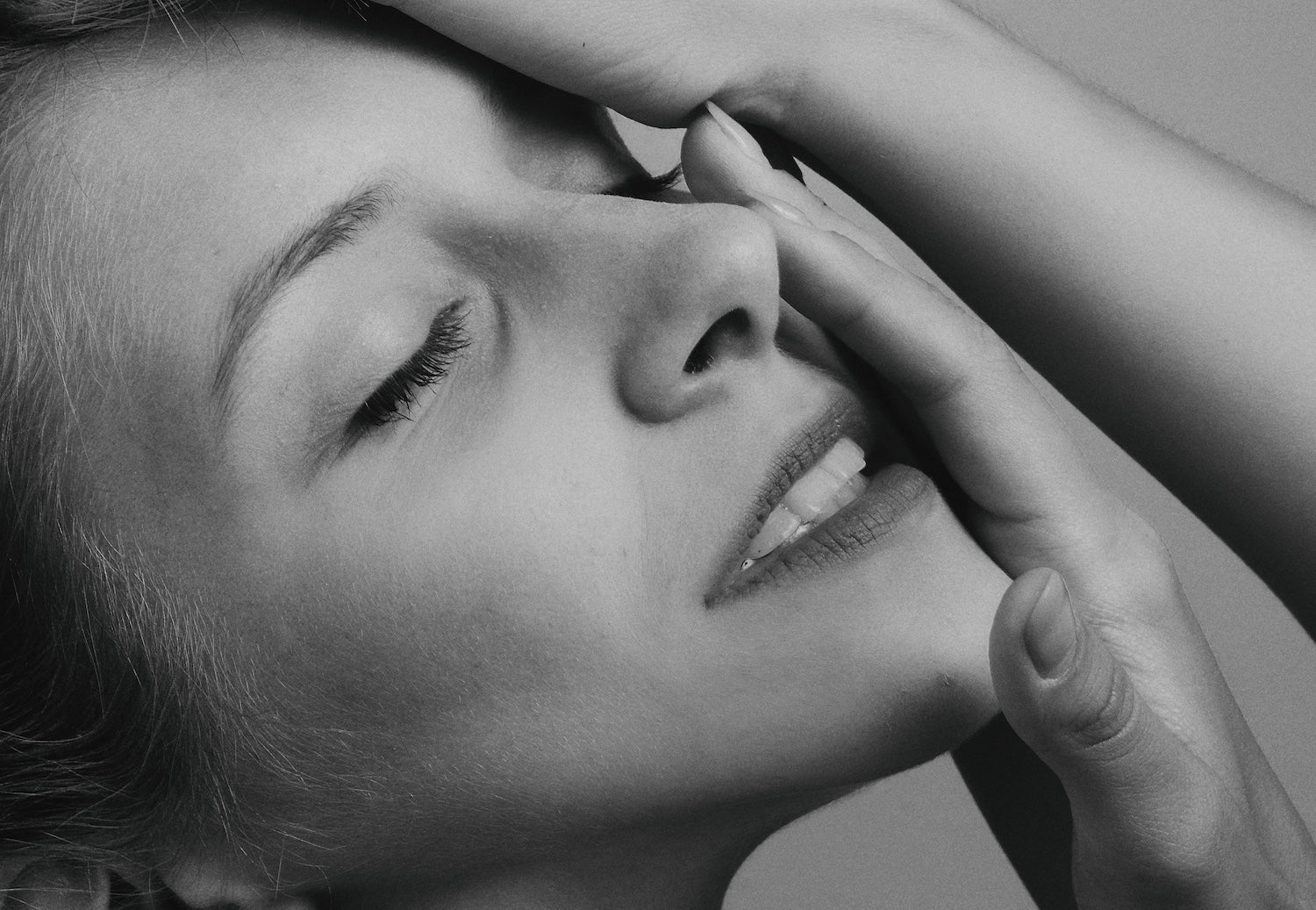
Why the dialogue between the skin and the brain changes the way we take care of ourselves
For a long time, we considered the skin to be a mere envelope.
An organ that needed to be protected, moisturized, or repaired.
Today, science invites us to change our perspective.
Our skin is not isolated from the rest of our body. It is in constant dialogue with our brain. This link, known as the skin-brain axis, is now at the heart of an emerging discipline: neurocosmetics. By studying the interactions between the skin, the nervous system, and cosmetic care, this new approach opens up unprecedented perspectives for understanding skin aging and imagining the beauty of tomorrow.
After exploring the concept of longevity applied to the skin, one question naturally arises: if our brain influences our skin, can our skin also influence our brain?
How does the brain influence the skin?
We have all noticed the same thing.
A period of stress, a lack of sleep, or a high emotional burden… and our skin changes.
It becomes duller, more sensitive, sometimes more reactive.
This is not just an impression.
When we are confronted with chronic stress, our brain releases cortisol, among other things, an essential hormone for our adaptation. But when this response is prolonged, it can disrupt the normal functioning of the skin: the skin barrier weakens, repair mechanisms slow down, and low-grade inflammation can set in.
In the long term, this condition contributes to skin aging and promotes the appearance of certain imbalances, such as dryness, redness, or a loss of radiance.
Our skin is therefore much more than a reflection of our age.
It is often a reflection of our inner balance.
Can the skin also act on the brain?
This is probably one of the most exciting discoveries of recent years.
For a long time, research focused mainly on how the brain influenced the skin.
Today, it shows that this communication is reciprocal.
Our skin is crisscrossed by millions of nerve endings and sensory receptors. Every touch, every texture, every facial massage is transformed into information sent to the nervous system.
Smell also plays an essential role. Unlike the other senses, odor molecules take a direct path to the regions of the brain involved in emotions and memory. This is what explains why a fragrance can instantly evoke a memory, provide a sense of calm, or change our emotional state.
Taking care of your skin is therefore also stimulating your brain.
What is neurocosmetics?
Neurocosmetics is a scientific discipline that studies the interactions between the skin, the nervous system, and cosmetic products.
Its goal is not to promise extraordinary effects, but to better understand how a treatment can support skin well-being by taking into account this permanent dialogue between the skin and the brain.
Researchers are now exploring several avenues: the role of certain active ingredients on receptors present in the skin, the influence of textures on our perception of care, and the impact of fragrances on our emotional state.
We are still at the beginning of this scientific revolution.
But one thing is already certain: a cosmetic product is no longer just about its composition.
It is also a sensory experience.
Why is the ritual becoming an integral part of the care?
For decades, the effectiveness of a cosmetic was essentially measured by its ingredients.
Of course, the quality of the formula remains fundamental.
But today we understand that the way we apply a treatment also contributes to the overall experience.
Taking the time to massage your face.
Deeply breathing in the aromatic notes of a formula.
Slowing down for a few minutes.
These gestures obviously do not replace the effectiveness of the active ingredients.
However, they stimulate the senses, promote a moment of relaxation, and restore the full ritual dimension of the care.
Cosmetics are thus entering a new era.
An era where the goal is no longer solely to correct the visible effects of aging, but to sustainably preserve the functioning of the skin by taking into account everything that influences it.
Key takeaways
- The skin and brain communicate constantly through the skin-brain axis.
- Chronic stress directly influences the functioning and aging of the skin.
- Touch, textures, fragrances, and facial massage also stimulate the nervous system.
- Neurocosmetics seeks to better understand these interactions to imagine the care of tomorrow.
- The effectiveness of a treatment depends on its formula, but also on the sensory experience it provides.
C-H-O Nature's vision
At C-H-O Nature, we are convinced that the skin cannot be understood independently of the person who inhabits it.
This is why we develop skincare rituals that combine carefully selected natural active ingredients, aromatherapy, and facial massage.
Because we believe that the effectiveness of a treatment arises as much from its formula as from the way it is experienced.
As cosmetics move toward longevity, understanding the dialogue between the skin and the brain is no longer just a research topic. It is a new way of thinking about beauty: more holistic, more preventive, and deeply human.
Also read: Why longevity is replacing anti-aging in cosmetics.